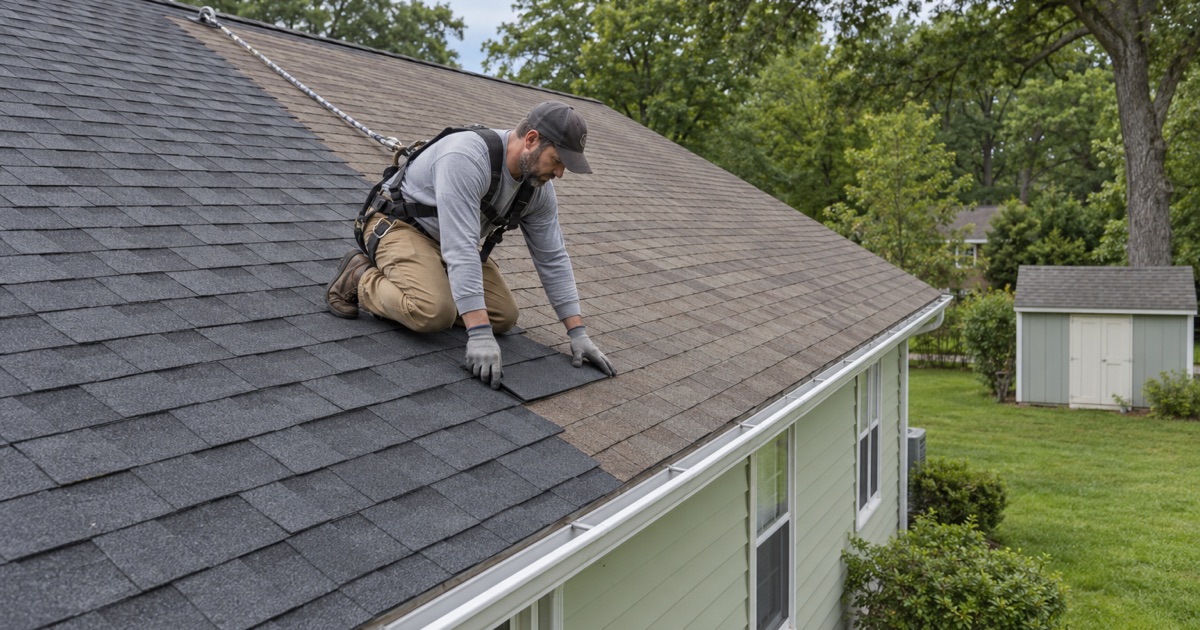
Slate Roof Repair and When Slate Is Worth Keeping
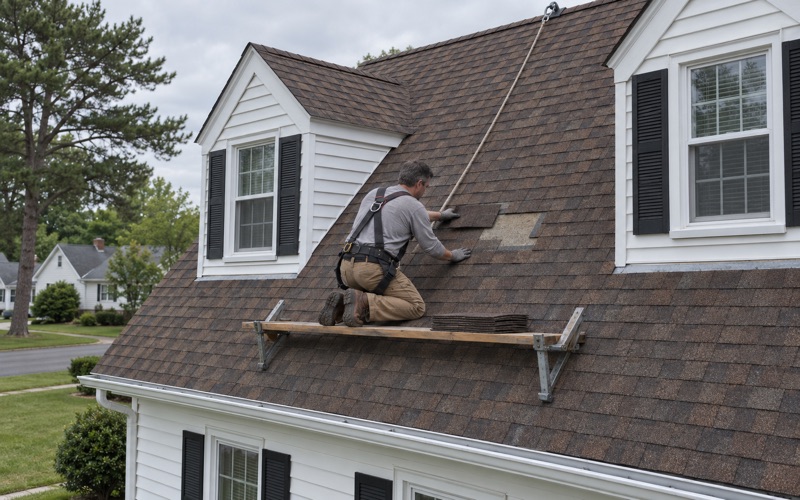
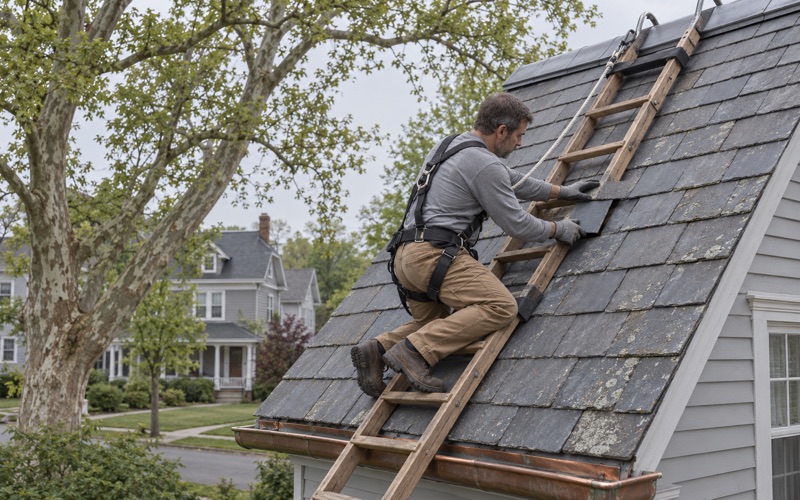
Natural slate can outlast several asphalt roofs, but the nails and flashing holding it often give out before the stone does. We replace broken or slipped slates one at a time with slate hooks and matched stone, and rebuild the flashing around them, rather than tearing off a roof that still has life in it. Where most slates are flaking or soft, we say so and explain what replacement would involve.
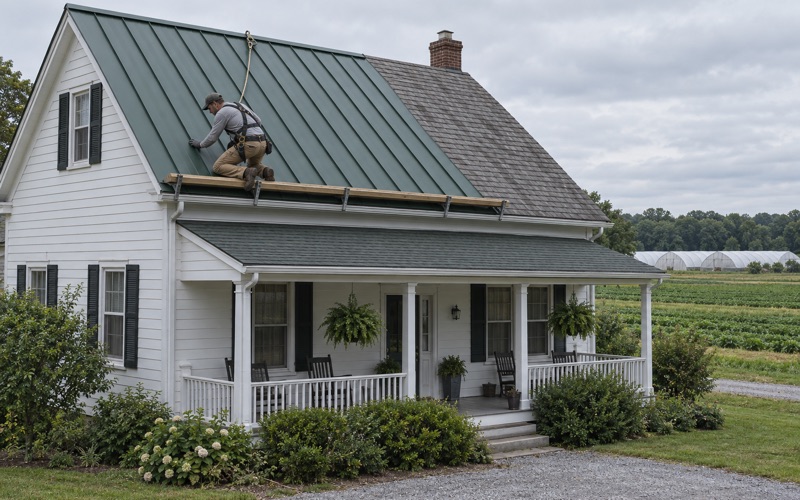
Standing seam metal roofing uses panels joined by raised seams with the fasteners hidden underneath, so no screw heads sit exposed to the weather. It suits low-slope porches, additions and owners who want a roof built for the long haul. We detail the eaves, rakes and penetrations with matching metal trim and quote it beside shingles, so the price difference is plain.
Exposed-fastener ribbed metal panels are the practical choice on many barns, equipment sheds and storage buildings, and we replace them as readily as a house roof. Qualifying buildings on a commercial farm come under New Jersey’s own farm building code, N.J.A.C. 5:23-3.2, which we check before the work is planned. Farm jobs are scheduled around the working season, so a building in use is not opened up at the worst week of the year.
Flat Roofs on Porches, Additions and Commercial Buildings
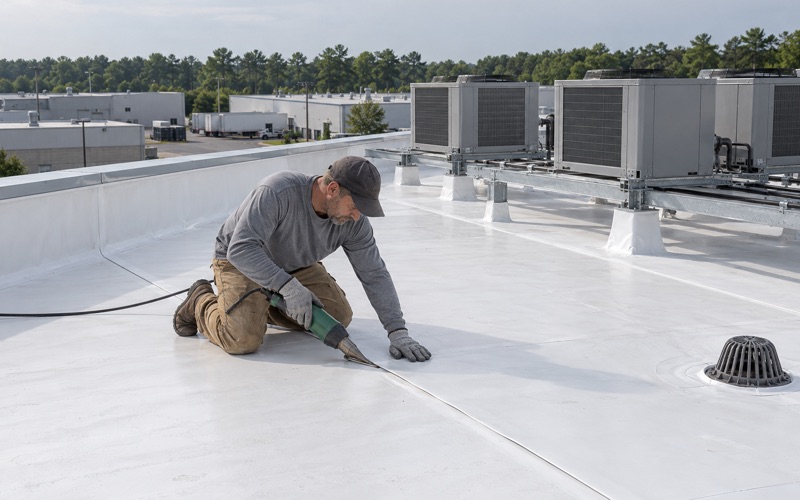
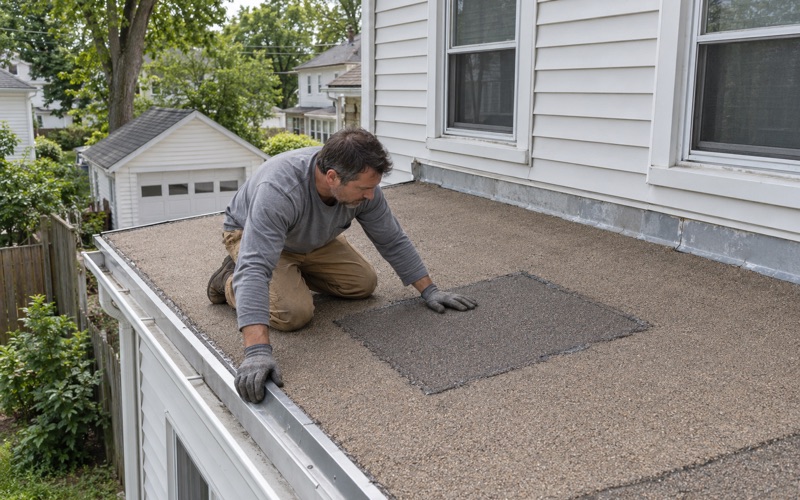
Flat and low-slope roofs cannot shed water the way a pitched roof does, so they depend on a continuous membrane with careful edges and drains. In Vineland, three in ten occupied homes are rented and 1,172 renter households live in buildings of 50 or more units, according to the Census Bureau’s 2024 five-year survey. Low-slope roofs over porches, additions, apartment buildings and storefronts are a steady part of our work.
EPDM, TPO and Modified Bitumen Compared
EPDM is a black rubber membrane with glued or taped seams, while TPO and PVC are white single-ply membranes with heat-welded seams that reflect sunlight. Torch-down SBS and APP modified bitumen goes on in layers and stands up well to foot traffic. We match the membrane to the slope, the building’s use and what is already up there, and explain the choice in the scope.
Roofing a Manufactured Home
Vineland has 1,569 mobile and manufactured homes, 6.9% of its housing, according to the same Census survey. Their roofs are engineered in a plant, often at a low pitch, so we check the home’s HUD data plate and its framing before recommending a coating, a membrane, a roof-over or a replacement. The right answer depends on the home in front of us, not on a standard package.
Seamless Gutters, Leaders and Gutter Guards
Seamless aluminum gutters are formed on site in one length per run, which removes the joints where sectional gutters usually leak. We size the gutters and leaders to the roof area they drain, pitch them to their outlets and hang them so they sit under the drip edge. Gutter guards earn their cost under heavy tree cover, and we tell you honestly whether your trees make them worthwhile.
Skylights: Repair, Reflash or Replace
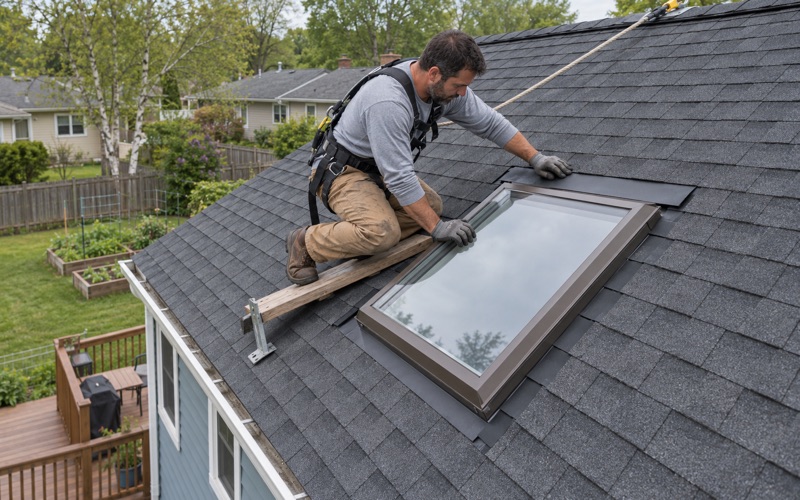
A leaking skylight is often a flashing problem rather than a failed unit. Curb-mounted skylights sit on a raised frame, while deck-mounted units fasten straight to the roof deck with their own flashing kit. We reflash a sound skylight during a repair, and when the roof is replaced we replace the skylight flashing as well, or the whole unit if its glass seal has failed.
Chimney Flashing and Crickets
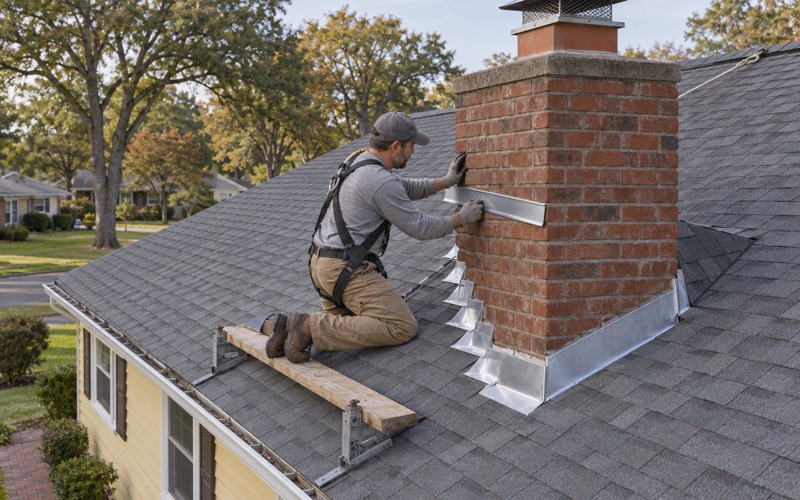
Chimney flashing is a two-part system: step flashing woven under the shingles along the sides, and counter flashing set into a cut reglet or mortar joint above it. Wide chimneys also need a cricket, or saddle, on the upslope side so water and debris split around the masonry instead of pooling against it. When we redo a roof, every piece of that flashing is replaced, never caulked over.