
Vineland Elite Roofing provides roof inspection in Vineland, NJ, serving surrounding cities including Buena, Millville, Buena Vista, Rosenhayn and Pittsgrove. With more than 20 years spent repairing and replacing roofs, we inspect with a roofer’s eye for what actually fails: the flashing, the penetrations, the seams and the attic underneath. The result is a written picture of your roof’s condition you can act on.
An inspection is useful before you buy or sell a house, after a storm, before an insurance renewal, or simply when a roof is getting older and you want to plan rather than react. In every case we go into the attic as well as onto the roof, because the attic shows moisture, ventilation problems and decking damage that the shingles hide.
We report what we find honestly, including when a roof is in good shape. If repairs are needed, we explain which ones matter now and which can wait, and you get a straight answer on whether the roof can be repaired before replacement is ever discussed. Every finding is backed by a photo you can keep.
Residential Roof Inspection
The Roof Surface
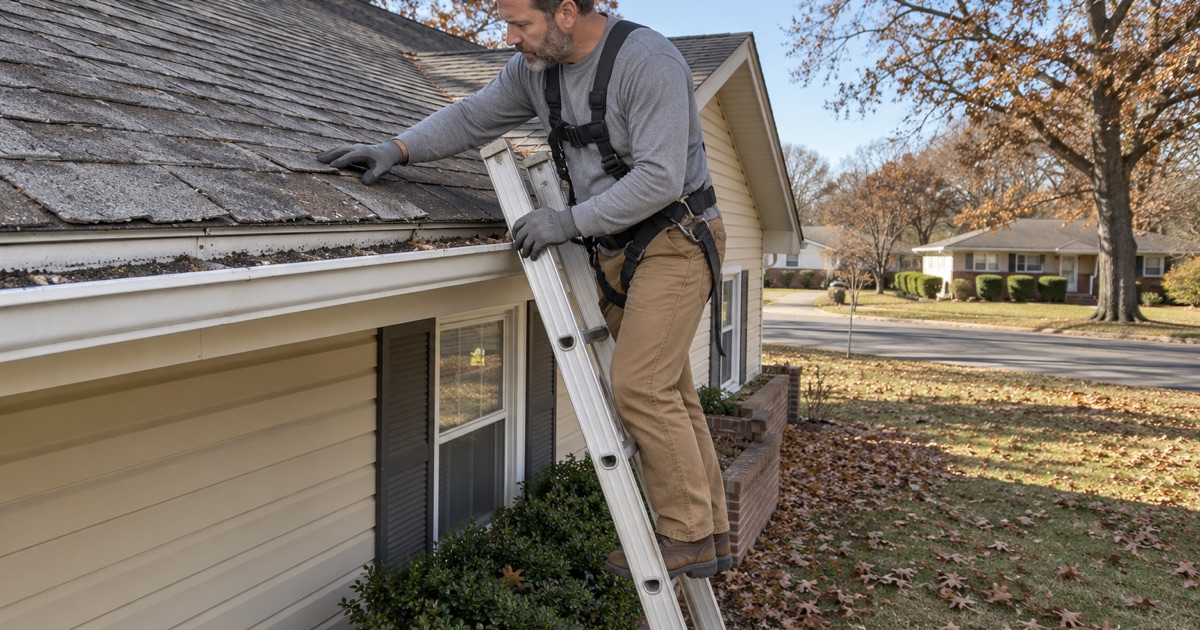
On a shingle roof we look for missing, creased, cracked and curling shingles, granule loss and exposed fiberglass, and tabs that have lost their seal. We check how the shingles were nailed where we can see it and look for signs of an overlay, since a second layer hides the deck and adds weight. On older houses we also note any slate, wood or metal sections and their condition.
We photograph each slope and any damage at close range, so you can see exactly what we saw. Where it is safe, we walk the roof rather than viewing it from a distance. On steep or fragile roofs, such as some slate, we inspect from ladders and the attic instead to avoid causing damage during the inspection itself.
Flashing and Penetrations
Most leaks begin at the joints, so this part of the inspection gets the most attention. We check step flashing along sidewalls, counter flashing on chimneys, apron and kick-out flashing at the base of walls, valley metal, skylight flashing and the condition of every pipe boot and roof vent. Roof cement smeared over a joint is noted as a sign of past trouble.
We also look at the drip edge at the eaves and rakes and how it meets the gutters. A missing kick-out flashing or a short drip edge can rot fascia and siding long before a leak appears inside, and catching it during an inspection is far cheaper than repairing the wall later.
The Attic Underneath
In the attic we check the underside of the decking for stains, soft spots and daylight, look at the rafters and nail tips for signs of moisture, and check the insulation for damp or compressed areas. Frost or rust on nails points to condensation, which is a ventilation problem rather than a roof leak.
We look at the soffit intake and the ridge or roof vents to see whether air can actually move through the space. Bathroom fans or dryer vents discharging into the attic are noted as well, because they can soak the decking from below. All of this goes into the report with photos.
Commercial and Flat Roof Inspection
Membrane and Seams
On EPDM, TPO, PVC and modified bitumen roofs we check the field of the membrane for punctures, blisters, cracks and shrinkage, and look closely at every seam and lap. Seams that have opened, even slightly, are the most common source of leaks on a flat roof. Areas of foot traffic around rooftop units get extra attention.
We note where the membrane has pulled away from walls or curbs and where previous patches have been made, and whether those patches used compatible materials. A history of mismatched repairs is useful to know, because it often explains recurring leaks in the same area.
Drains, Edges and Ponding
We check that drains, scuppers and gutters are clear and properly sealed, and that edge metal is secure. Areas where water stands after rain are marked, since long-term ponding wears the membrane and can point to a sagging deck or a blocked drain. We also check parapet walls and their coping for gaps.
The report for a commercial building separates urgent repairs from items that can be planned for the next season or budget cycle. Property managers and owners get photos and locations for each item so the work can be scheduled or put out to bid with a clear scope.
Rooftop Units, Curbs and Old Openings
Heating and cooling units, exhaust fans and skylights sit on raised curbs, and the membrane flashing up the sides of each curb is a frequent leak point. We check the base and cap flashing on every curb, the condition of the membrane along the paths service technicians walk, and the seals around pipes and conduit passing through the roof.
Openings left behind by removed equipment are noted as well, since they are often closed with a quick patch that was never meant to last. Damage around a unit is photographed so the owner can share it with the mechanical contractor, which keeps the next repair from being blamed on the wrong trade.
When to Book a Roof Inspection
Buying or Selling a House
A roof is one of the largest single costs a buyer can inherit, and a general home inspection does not always get onto the roof. A roofer’s inspection gives you photos and a written assessment to use in negotiation or to plan the first year of ownership. For sellers, an inspection before listing lets you fix small problems before they turn up in a buyer’s report.
In some towns a Certificate of Occupancy inspection is required at sale or before a new tenant moves in, and the property maintenance checklists those inspections use can include roofs. We do not perform those municipal inspections, but a roof report ahead of time helps you know where you stand.
After a Storm
After high wind or a fallen limb, an inspection shows damage that cannot be seen from the ground, such as broken seals and creased tabs. We photograph and write up the damage for your own insurance claim and will meet the adjuster on site when you ask. Wear and tear is reported as wear and tear, so the report stays credible.
If the roof is open, we tarp it first and inspect fully once it is safe. Acting quickly matters, because water that gets in during the next rain can turn a simple roof repair into ceiling, insulation and drywall work as well.
Planning Ahead on an Older Roof
If your roof is getting older, an inspection lets you plan a repair or replacement on your own schedule instead of during an emergency. We tell you what is wearing fastest and what can reasonably wait, without inventing a deadline. That gives you time to budget and to collect comparison quotes rather than accepting the first price offered after a leak.
The written report becomes a baseline. When we or another roofer look at the roof again in a year or two, the photos show what has changed, which makes the next decision easier and better informed.
Before Solar Panels Go Up
A solar array covers a large part of the roof for many years, and taking it off and putting it back later adds a cost of its own to any re-roof. An inspection before the panels are installed tells you whether the roof under them is likely to need work during the life of the array. If it is, replacing the roof first is usually the cheaper order of operations.
We check the decking from the attic, the condition of the shingles where the array will sit, and the flashing around any vents or chimneys nearby. The report gives your solar company a clear picture of the roof they will be mounting to, and gives you the information to decide whether to re-roof first.
- 20+ Years in Roofing
- Attic-First Leak Checks
- Line-Item Written Scopes